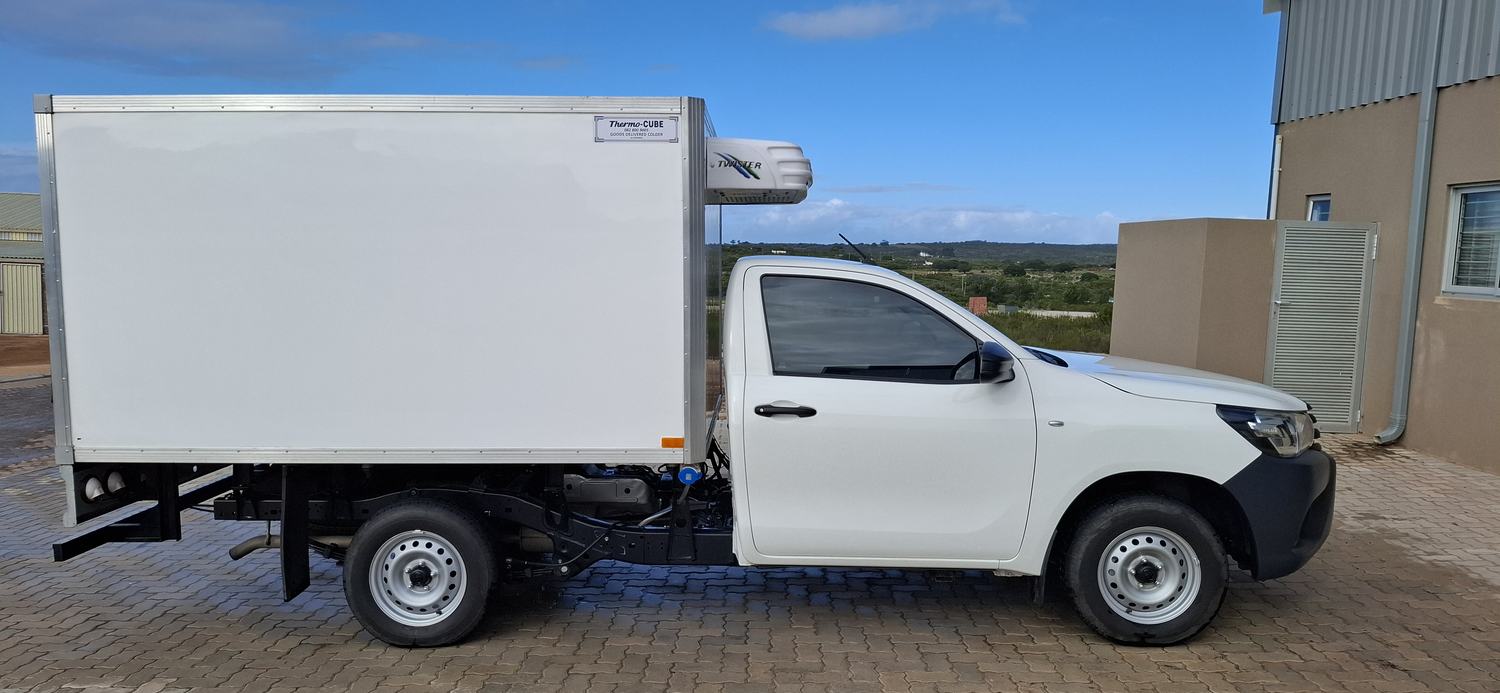
Start with the route, then choose the vehicle
A frozen-food courier vehicle has to suit the actual working day: the cartons collected, the roads travelled, the customers visited and the time between loading and the final handover. A short trip with one delivery presents a different cooling challenge from a morning of small restaurant orders.
Australian food-safety guidance is a useful starting point. Food Standards Australia New Zealand emphasises clean transport, protecting food from contamination and keeping frozen food frozen. These principles travel well; Australian temperature rules do not replace South African requirements.
Write down your busiest realistic route: collection time, driving distance, likely traffic, number of stops, unloading time and the longest wait at a customer. Include the return trip if unsold stock comes back. Assess the refrigeration against this route, rather than distance alone.
Check both space and available payload
List the products, carton sizes and total weight, including crates, equipment and anything else carried. Test the loading arrangement with your normal containers. Enough cubic space does not establish enough legal payload.
A refrigerated conversion adds weight. Establish the completed vehicle's available payload and axle limits from its documents and an appropriate weighing, allowing for occupants, fuel and fitted equipment. An ordinary bakkie's advertised payload cannot simply be carried over to the converted vehicle.
Think about access too. Can the driver reach each order without moving several others? A side door can help with access, but its benefit depends on how the load is arranged.
Specify cooling for repeated deliveries
Give a refrigeration specialist your product temperatures, load size, route and expected outside conditions. Ask them to assess the insulated body and refrigeration unit together. The temperature shown on an empty body's controller does not demonstrate performance through a loaded, multi-stop route.
Thermo King's home-delivery guidance highlights the combined effect of insulation, ambient conditions, door openings and loading. Ask for equipment suited to that combination and for a practical demonstration under conditions relevant to your work.
Clarify how the unit is powered while driving and while stopped. If you need overnight holding or cooling at a loading point, confirm whether the particular vehicle has suitable standby equipment; do not assume it is fitted.
Prepare the load and protect airflow
Bring food to its required transport temperature before loading. A transport refrigeration unit should not be assumed to freeze a warm batch of food. Prepare the body according to the equipment supplier's instructions and organise orders before opening the doors.
Keep the unit's air paths clear and follow its loading guidance. Pack for the delivery sequence, secure the load and keep door openings as brief as the work safely allows. These habits help the system maintain conditions as the route progresses.
For example, an illustrative route with eight customers should be planned around eight unloading events and possible waiting time, even if the kilometres are modest. This is a planning example, not a performance claim for any vehicle.
Apply South African food-transport requirements
South Africa's R638 of 2018 includes food-transport requirements in regulation 13. These cover cleanliness, protection from contamination and, where applicable, the construction of the freight compartment. Temperature requirements are addressed in regulation 8 and Annexure E; Annexure G deals with temperature measurement.
Match your operating procedure to the particular food and any applicable product rules. Confirm the requirements for your business with the local environmental health practitioner, and agree delivery and rejection temperatures with your customer. Buying a refrigerated body does not by itself demonstrate compliance for every operation.
Use a suitable, checked thermometer and retain useful collection and handover records. A controller reading describes conditions at its sensor; it is not automatically the product's core temperature. Our R638 delivery guide provides further background.
Compare ownership with outsourced deliveries
Compare the full cost of your own vehicle with courier quotations for the same service. Include finance or capital cost, insurance, licensing, driver time, fuel, refrigeration servicing, tyres, cleaning and downtime. Allow for a backup plan if the vehicle or refrigeration needs repairs.
Ask an outsourced provider about collection windows, delivery areas, temperature arrangements, minimum charges, failed deliveries and evidence of handover. Owning the vehicle gives you control over scheduling, but it also makes you responsible for running and maintaining that service.
A useful comparison uses your actual orders and delivery pattern. There is no reliable universal saving per delivery without those figures.
Bring a route brief to the viewing
- Product type, required temperature and normal loading temperature.
- Maximum carton dimensions, load weight and delivery sequence.
- Typical route duration, stops and time spent unloading.
- Vehicle and refrigeration service records, conversion invoices and a demonstration.
- Completed vehicle payload, load fit, door seals and cleanable surfaces.
- Power arrangements, maintenance support and backup delivery plans.
Our used freezer bakkie buyer's guide explains how to assess the complete conversion and supporting records.
The 2024 Toyota Hilux advertised here has a Roamer Rand insulated body and Twister SF300FS (supplied by JAVGRO) refrigeration. The asking price is R599 000 including VAT, sold through Godrich Toyota, Bronkhorstspruit. Confirm availability, current mileage and suitability for your load and route when enquiring. Contact Godrich Toyota on 013 931 0500 or through the AutoTrader listing for specifications and viewing arrangements.
Sources and further reading
This is an original South African guide informed by the following sources. The Australian guidance supplies general operating principles; the South African regulation supplies the local legal reference.
- Food Standards Australia New Zealand: Transporting food safely.
- Thermo King: home-delivery refrigeration guidance.
- South African Government: R638 of 2018, particularly regulations 8 and 13 and Annexures E and G.
