Air springs help a bakkie carry its load properly. On a refrigerated bakkie the insulated body and fridge unit stay on the back every day, even when the truck is empty. Helper air springs keep that weight level and steady, so the bakkie rides and handles as it should.
What air springs are
A helper air spring is a tough rubber bellows, filled with air, that works alongside the bakkie's standard leaf springs. On a Hilux rear axle a pair is fitted, one each side, between the axle and the chassis. The leaf springs still carry the load and locate the axle. The air springs add support you can adjust.

You set them through an inflation valve, much like a tyre. Some installations add a small on-board compressor and a gauge in the cab, so the driver can adjust the pressure without a pump. Either way, more air means more support and a higher rear; less air means a softer ride.
Why a refrigerated body benefits
A load-bin bakkie carries most of its weight only when it is loaded. A refrigerated bakkie is different in three ways:
- The weight is permanent. The insulated box, doors, partition and refrigeration unit travel on every trip. Standard leaf springs that carry that weight every day can settle and sag over the years.
- The weight sits high. A tall box raises the centre of gravity. Firmer rear support reduces body roll in corners and sway in crosswinds, and keeps the box steadier when an overtaking truck passes.
- The load changes all day. A delivery round starts full and finishes empty. Air pressure can be set for the morning's load and lowered for the run home, which leaf springs alone cannot do.
A level bakkie also keeps its headlights aimed at the road rather than oncoming drivers, keeps the rear clear of the bump stops on corrugated gravel, and keeps the driver's steering feel closer to what Toyota intended.
Carrying the permitted load
Air springs let the bakkie carry its full permitted load, up to the 2,810 kg GVM on its licence disc, more safely and comfortably.
Setting the pressure
- Never run them empty. Air springs need a minimum pressure, typically 5 psi (about 0.35 bar) for common kits, to stop the bellows folding and chafing. Check the figure for your kit; some specify more.
- Measure a reference. With the bakkie empty, on level ground, measure from the centre of each rear wheel to the edge of the wheel arch. Write the figure down.
- Load, then adjust. After loading, add air until the rear returns to roughly that reference and the vehicle looks level from the side. That is the right pressure. More than that only makes the ride harsher.
- Keep both sides equal unless the installer has set them up to balance an uneven load, such as a side-mounted tank or a fridge unit offset to one side.
- Let air out when the load comes off. Return to the minimum for an empty run. The ride is better and the rear tyres keep their grip.
The maximum pressure on the bellows label is a limit for the part, not a target.
Looking after them
- Check the pressure weekly with a tyre gauge at the valves. A spring that loses more than a few psi overnight has a leak.
- Find leaks with soapy water brushed over the fittings and the valve. Bubbles show the leak; usually it is a fitting that needs re-seating rather than a failed bellows.
- Look at the bellows when the tyres are rotated. Check for cracks, chafing, stones caught in the folds and damage from road debris, especially after gravel work.
- Check the air lines are clipped clear of the exhaust, the driveshaft and sharp edges. A melted or rubbed-through line is the most common failure.
- Wash off mud and salt from underneath, particularly after farm roads or coastal work.
Checks when buying a bakkie with air springs
- Make and kit. Ask what was fitted and by whom. A known brand fitted by a suspension specialist is easier to service and to get parts for.
- The pressure on the day. Read the valves. The right pressure is just enough to level the load; springs kept at maximum all the time only make the ride harsh.
- Overnight hold. If you can, check the pressure in the evening and again the next morning.
- Stance. Empty, at minimum pressure, the bakkie should sit near level, not nose-up. A low rear on minimum pressure suggests tired leaf springs.
- Tyre wear. Uneven wear on the rear tyres can show a load habitually carried too far back or off-centre.
- Tell your insurer. Declare the air springs, the body and the refrigeration unit when you take out cover, so the policy describes the vehicle you actually drive.
On this Hilux
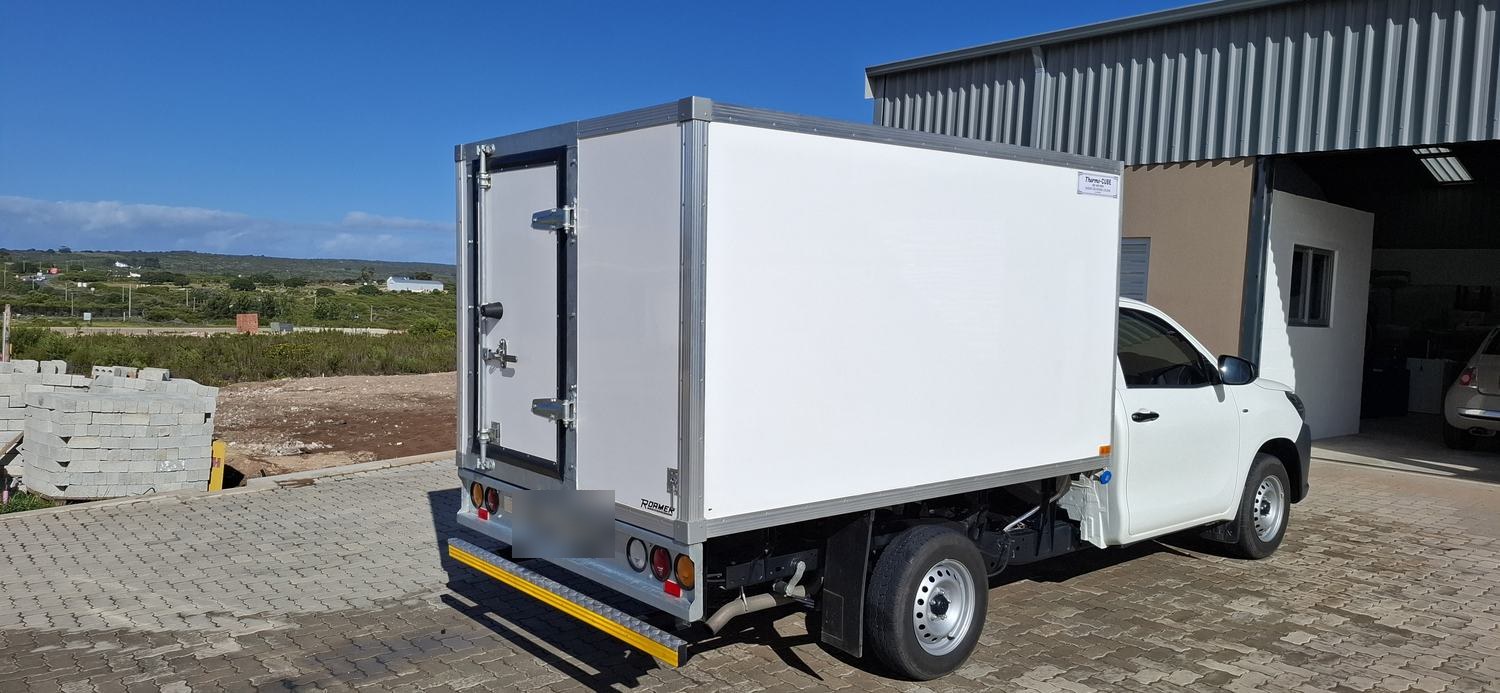
The 2024 Hilux on this site has helper air springs fitted at the rear, alongside its Roamer Rand insulated body, Twister SF300FS refrigeration (supplied by JAVGRO), an extra diesel tank and a rear bumper step. When you view it, ask the dealership to show you the inflation valves and the pressure, and use the checks above. The balance of the specification is on the vehicle details page.
Sources
The general guidance on air helper springs comes from the manufacturer's published instructions. It is background, not an endorsement of this vehicle, and not a statement of which kit this Hilux has.
- Firestone Airide: Ride-Rite air helper spring kits.
- Firestone Ride-Rite installation manual (PDF), on minimum pressure and using only enough air to level the vehicle.
- Buying a used freezer bakkie, for the rest of the vehicle and conversion checks.
